

Last updated: August 23, 2026. İlter is a counter-unmanned aircraft system (C-UAS) family developed by Boğaziçi Defense Technologies. A lost video feed, GNSS warning or control-link interruption does not, by itself, prove that İlter was active. Antenna orientation, terrain, local interference, software, hardware and poor satellite visibility can cause similar symptoms.
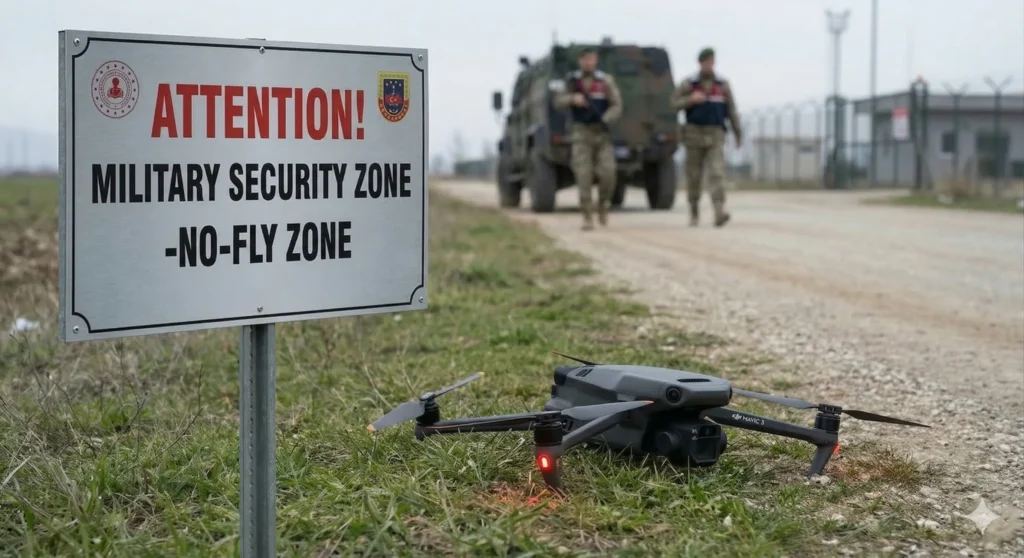
What is the İlter drone detection and neutralisation system?
According to the manufacturer’s current product pages, systems such as İlter J250 and İlter J400 can combine RF detection and direction finding, radar, electro-optical tracking and, depending on configuration, control-link/GNSS jamming or GNSS deception. İlter is therefore a family of configurable detection and countermeasure products, not a single universal jammer.
Public information cannot reliably establish which configuration is deployed at a particular site, its live coverage or when a countermeasure is enabled. Claims that every airport has the system, that it operates continuously, or that it always acts at a fixed distance should not be treated as verified facts.
Why can a DJI drone lose signal?
- Antenna and line of sight: Poor controller-antenna orientation, buildings, hills, vehicles and vegetation can attenuate the radio link.
- Local RF congestion: Wi-Fi, cellular infrastructure and other transmitters can degrade video or control performance.
- GNSS visibility and multipath: Urban canyons and reflective surfaces can reduce position quality or create jumps.
- Compass, IMU or hardware faults: Impact, moisture, a damaged antenna or an unsuitable calibration can produce similar warnings.
- Authorised C-UAS activity: A control link or navigation signal may be affected near a protected site.
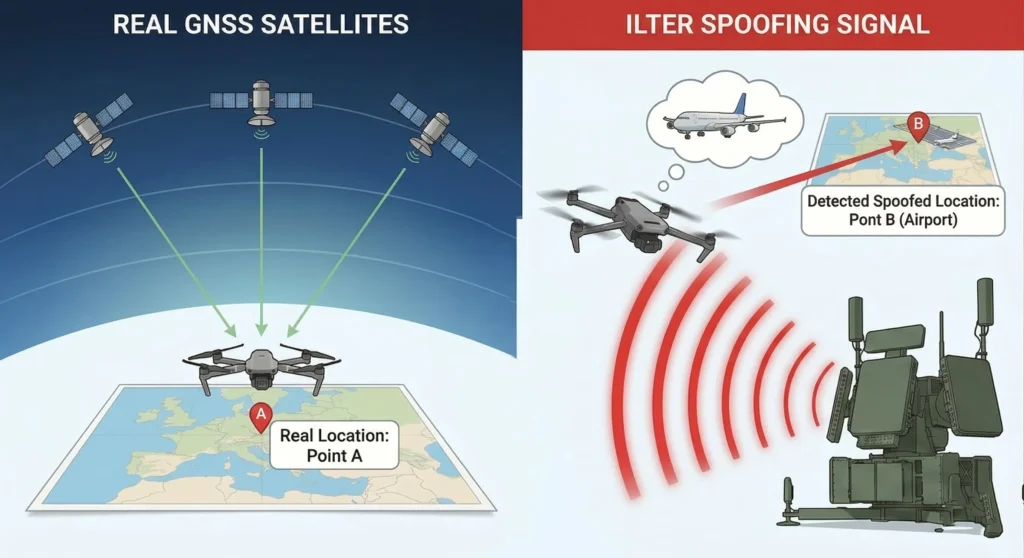
Jamming versus spoofing
RF or GNSS jamming
Jamming makes it difficult for a receiver to distinguish the wanted signal. Affected control/video links may freeze or disconnect; affected GNSS reception may show fewer satellites or poor position accuracy. The aircraft’s response depends on the model, firmware, configured signal-loss action, GNSS status, Home Point and surroundings. Return-to-Home, hovering, landing or drift may occur; none is a guaranteed outcome in every incident.
GNSS spoofing
Spoofing attempts to make a receiver accept plausible but incorrect position or timing data. A position jump, disagreement between visible movement and map data, or an unexpected Home Point can be warning signs. Multipath reception, weak satellite geometry and sensor faults can also produce superficially similar symptoms.
Does İlter force every DJI drone to land?
There is no single, guaranteed result. An authorised C-UAS system may affect communications or navigation, but it is inaccurate to state that every stock DJI aircraft will always land, always return home, or become fully uncontrollable because of a “fake airport”. Aircraft model, firmware, pilot settings, available sensors, interference type and the environment all influence the response.
ICAO guidance also treats responses to unauthorised drones as a coordinated safety and legal matter because countermeasures can affect other aircraft and communications, navigation or surveillance systems. A remote pilot therefore cannot reliably identify the equipment brand or intervention method from a single warning message.
What to do about an unexpected link or position problem
- Prevent it: Check the applicable civil-aviation airspace source, current NOTAMs, weather and DJI in-app zone information before flight. DJI’s map does not replace official permission.
- Maintain visual line of sight: Do not guess a safe direction or landing site if you cannot see the aircraft.
- Identify the warning: Control-link, video-link and GNSS loss are different events. Confirm the aircraft’s configured signal-loss action before take-off.
- Preserve evidence: Save the flight record, screenshots, approximate coordinates and time. After a crash, do not force a damaged battery back into service.
- Stay outside restricted areas: Boosters, region/FCC modifications and similar workarounds do not provide flight permission or a dependable safety margin.
For more on ATTI mode, Home Point and failsafe behaviour, read our DJI flyaway guide.
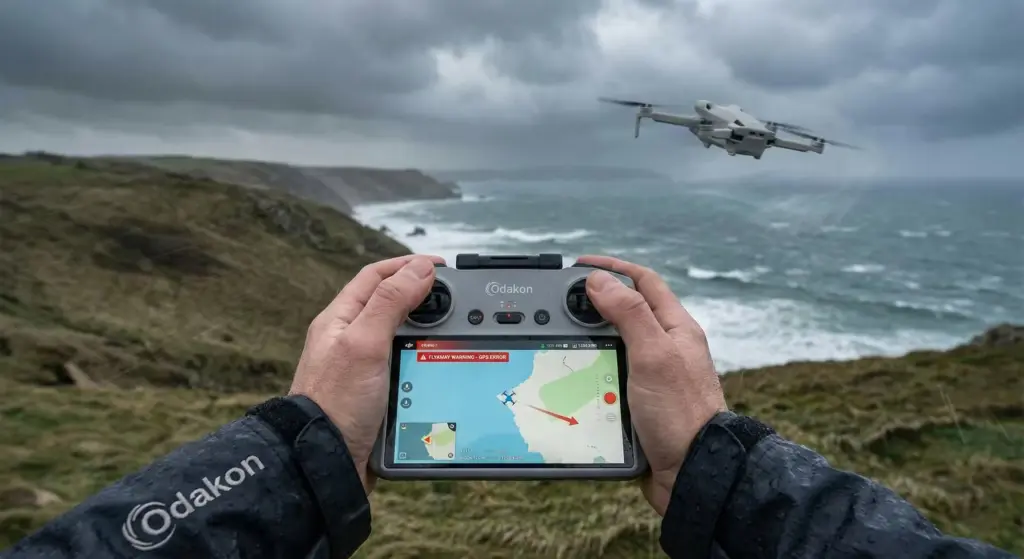
Bottom line
İlter is a genuine C-UAS family that can offer detection, tracking and authorised countermeasure capabilities depending on configuration. A consumer pilot, however, cannot conclusively attribute a “Signal Lost” warning to İlter. The practical response is to fly only where authorised, remain within visual line of sight, configure failsafe behaviour in advance and use flight records for any post-incident diagnosis.