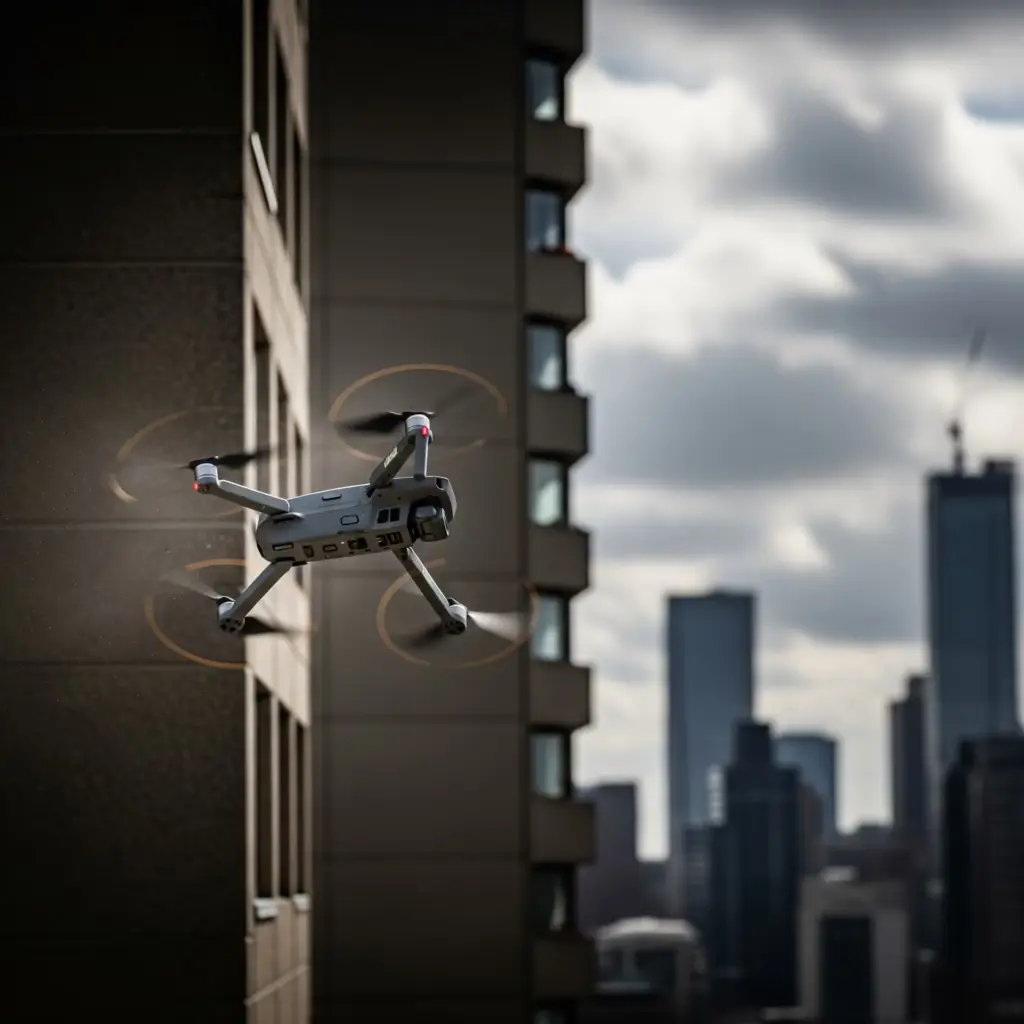
Drone technology, led by DJI, has become accessible to everyone from hobbyists to professionals. However, one of the biggest financial and operational risks for operators of these technological marvels is the phenomenon known in the literature as “Flyaway.”
In this comprehensive technical analysis prepared for Odakon readers, we examine the difference between a simple crash and a Flyaway, the physics of the “Toilet Bowl” effect, the dangers of ATTI mode, and what you need to do within seconds to save your drone.
What Is a Flyaway? (It’s Not a Simple Loss)
In aviation literature and drone piloting jargon, Flyaway refers to a situation where an aircraft stops responding to the pilot’s control commands and autonomously flies away from the operator, disappearing.
This is completely different from crashing into a tree due to pilot error or falling because the battery died. During a Flyaway, the drone usually stays airborne with its motors running; however, it either doesn’t receive the pilot’s “Return,” “Descend,” or “Stop” commands, or it responds to these commands in the opposite way.
The Automation Paradox
Modern drones (Mavic, Mini, Air series) combine GPS, Compass, and IMU sensors to make flight safe. A Flyaway typically occurs when one of these systems produces conflicting data and the flight computer trusts the wrong data source. This is called the “Automation Paradox” — the system designed to protect you becomes the very factor that causes the drone to fly away.
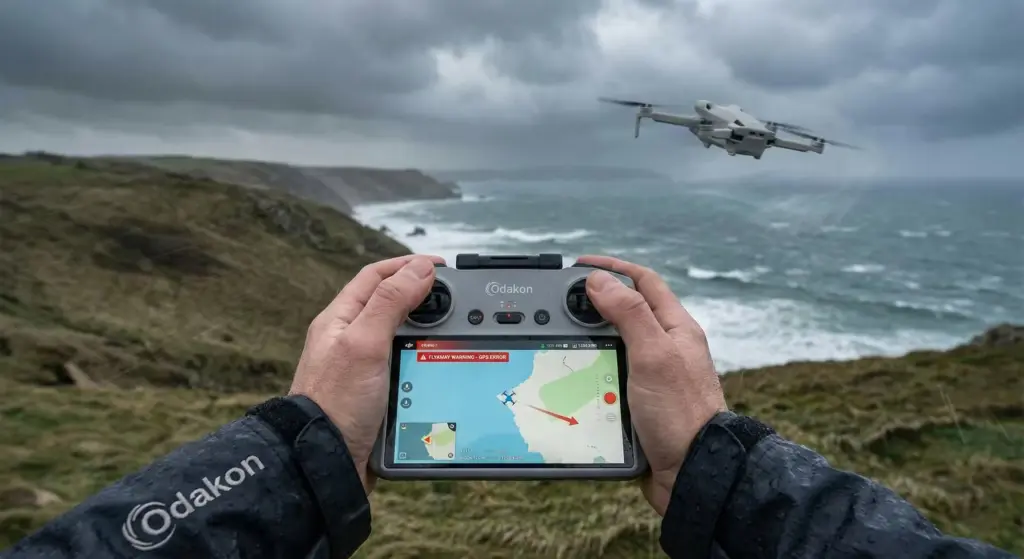
Why Do Drones Fly Away? 3 Critical Scenarios
According to technical analyses, Flyaway incidents generally fall into three main categories:
1. Navigational Mismatch and Magnetic Interference
Your drone combines Compass (Magnetometer) and GPS data to find its direction. GPS tells the drone “where” it is, while the compass tells it “which direction” it’s facing.
- The Invisible Danger: If there is concentrated metal on the surface where you take off (rebar in concrete, vehicle hoods, metal manhole covers), the compass deviates magnetically.
- Result: When the drone takes off, GPS says “Go straight,” but due to the corrupted compass, the drone actually flies rapidly sideways. The more the pilot tries to pull the drone back, the further it flies away.
2. Toilet Bowl Effect: The Physics of Failure
This is the most dramatic of Flyaway incidents. While the drone tries to hover (Position Hold), the data conflict between GPS and the Compass causes it to start tracing expanding circles around itself.
- Mechanical Process: The drone makes a move in one direction to correct the GPS error, but because the compass is corrupted, it goes the wrong way. When it tries to correct again, a circle forms.
- Result: Just like a vortex or water swirling in a toilet bowl, the drone accelerates with each revolution and is flung in one direction by centrifugal force, disappearing uncontrollably.
3. The ATTI Mode Trap and Wind Drift
A large portion of cases perceived as Flyaway are actually not technical failures, but environmental drift. The main player here is ATTI Mode.
Deep Dive: What Is ATTI Mode and Why Is It Dangerous?
In newer generation DJI drones (Mini 3, Mini 4 Pro, Air 3, etc.), there is no manually selectable ATTI mode; however, the system switches to this mode automatically when it detects an error.
What Is ATTI (Attitude) Mode Exactly? It’s a “blind flight” state where the drone disables GPS satellites and Visual Positioning Systems (VPS), but continues to maintain its altitude (via Barometer) and balance (via IMU).
The “Frictionless Ice” Effect To understand ATTI mode, think of your drone as a hockey puck on an ice rink:
- No Brakes: In GPS mode, the moment you release the sticks, the drone locks in place mid-air. In ATTI mode, the drone drifts wherever the wind blows.
- Racing the Wind: If the wind speed is 20 km/h, your drone drifts away from you at 20 km/h without expending any motor power.
- User Error: The pilot thinks the drone is flying away on its own (Flyaway perception). In reality, the drone is simply being carried by the wind. If the pilot panics and gives wrong commands, the device is lost completely.
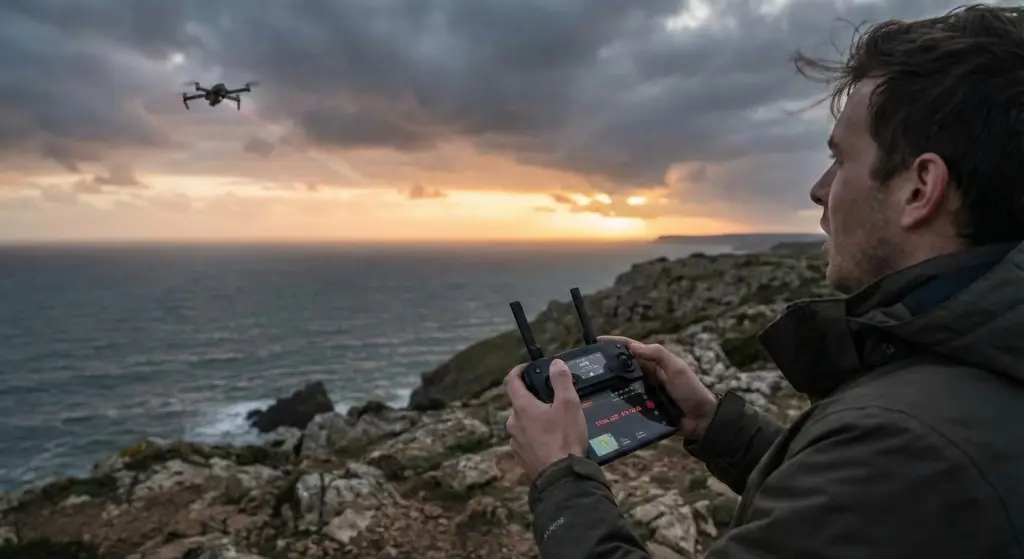
What to Do When Your Drone Goes Out of Control? (The 5-Second Rule)
Those first moments when you realize your drone isn’t responding to commands are critical. Here are the life-saving moves:
- Press the “Pause” Button: The pause (II) button on the controller is an emergency brake. If the drone is making an autonomous error (during RTH or Waypoint), this button cancels all autonomous processes.
- Switch to Sport Mode (The Golden Rule): If the drone is spinning around itself (Toilet Bowl) or making erratic movements, immediately switch to Sport (S) mode.
- Technical Reason: Sport mode disables or reduces the sensitivity of GPS-assisted braking and some obstacle sensors. It takes control away from faulty sensors and gives it directly to the pilot’s thumbs (Direct Stick Input).
- Manage Altitude:
- If Toilet Bowl: Climb higher. Magnetic interference may decrease as you move away from the ground.
- If ATTI (Wind): Descend. Wind speed is always lower at ground level.
Critical Precautions Before a Flyaway
- Don’t Fall for the Calibration Myth: Performing compass calibration before every flight is actually harmful. Only do it when the app requests it or when you’ve traveled 500+ km. Never calibrate on a metal surface.
- Use the Home Point Dynamically: If you’re flying from a moving vehicle or boat, set the Home Point to “Controller Location” instead of “Takeoff Point.” Otherwise, the drone will try to return to the takeoff spot (the boat that’s no longer there) and land in the water.
- DJI Care Refresh and “Binding”: Many users skip this. Even if you have insurance, if you haven’t “Bound” your controller and account to the drone before the incident occurs, you cannot benefit from Flyaway coverage.
- How to Do It:
Profile > Device Management > Bind to Account
- How to Do It:
Conclusion
Flyaway is a reality of drone technology, but it’s not destiny. As Odakon readers, trust the technology but trust physics even more.
Remember: when you get a “Weak Signal” warning, instead of panicking, pointing the antenna toward the drone and selecting the right flight mode (Sport) can save your device worth thousands of dollars.