

Have you ever marveled at breathtaking aerial footage in a blockbuster movie or a stunning YouTube travel vlog? Chances are, the flawless cinematography was captured by the world’s leading DJI drone brand. Originally known as Dà-Jiāng Innovations, this tech giant has fundamentally transformed how we view the world from above. Whether you are an amateur enthusiast or a seasoned Hollywood director, DJI provides the tools that make high-quality aerial imaging accessible to everyone.
But where did this phenomenal success story begin? The company’s roots trace back to Shenzhen, a bustling metropolis often referred to as the Silicon Valley of China. This strategic location gave the emerging DJI drone brand unparalleled access to a vast supply chain, raw materials, and a highly skilled pool of young engineers. The city’s thriving hardware ecosystem was the perfect incubator for what would soon become a multi-billion dollar empire.

The enterprise was officially founded in 2006 by Frank Wang, a university student with a lifelong passion for remote-controlled flight. What started in Wang’s dorm room as a small project building flight control systems for model helicopters rapidly evolved. By shifting focus to developing proprietary flight platforms and integrated cameras, the visionary entrepreneur essentially created the modern consumer drone industry from scratch.
Fast forward to 2026, and the company’s global leadership remains virtually unchallenged. Recent industry reports indicate that the brand controls over 70% global market share in the commercial and civil sectors. In specific consumer categories, this dominance is even more pronounced, with market penetration reaching staggering 85% levels. This massive footprint has elevated the manufacturer from a mere hardware producer to an authoritative voice setting global aviation standards.
Despite navigating complex regulatory landscapes, including the highly publicized late 2025 FCC restrictions in the United States, the firm has maintained its robust market position. Consumers consistently choose these products for their exceptional reliability, intuitive software ecosystem, and competitive pricing. Today, the corporation employs over 6,000 professionals across the globe, operating major offices in the US, Germany, the Netherlands, and Japan.
Revolutionizing the Skies: Iconic Product Lines
The true secret behind the success of the DJI drone brand lies in its ability to make complex aviation technologies user-friendly. The introduction of the Phantom series popularized the “Ready-to-Fly” concept, eliminating the need for complex assembly. Today, their diverse portfolio caters to a wide spectrum of creative and industrial needs.
- Mavic Series: Pioneering the foldable drone design, this lineup balances extreme portability with premium image quality. The flagship Mavic 3 remains a staple for professional content creators.
- Mini Series: Weighing strictly under 250 grams, these ultra-lightweight UAVs bypass stringent registration requirements in many jurisdictions. Models like the DJI Mini 4 Pro pack omnidirectional obstacle sensing and stunning 4K resolution into a pocket-sized form factor.
- Inspire Series: Engineered for high-end cinema and commercial production, these heavy-lift platforms feature interchangeable lenses and unparalleled flight dynamics.
- Osmo and Ronin: Expanding beyond aerial dominance, the brand leads ground-based stabilization with compact cameras like the Osmo Pocket and heavy-duty Ronin professional gimbal systems.
Powering these advanced machines requires cutting-edge energy solutions. High-capacity LiPo (Lithium Polymer) batteries form a crucial pillar of their R&D investments, maximizing flight times while ensuring operational safety. For traveling creators, understanding airline regulations regarding these high-density power packs is essential for hassle-free transit around the globe.
The Hasselblad Partnership: Elevating Optical Brilliance
To solidify its position as an imaging powerhouse, the company executed a masterclass in strategic expansion. In 2015, they initiated a profound partnership with the legendary Swedish camera manufacturer, Hasselblad. This collaboration deepened significantly when the drone maker acquired a majority stake in the iconic photography brand in January 2019.
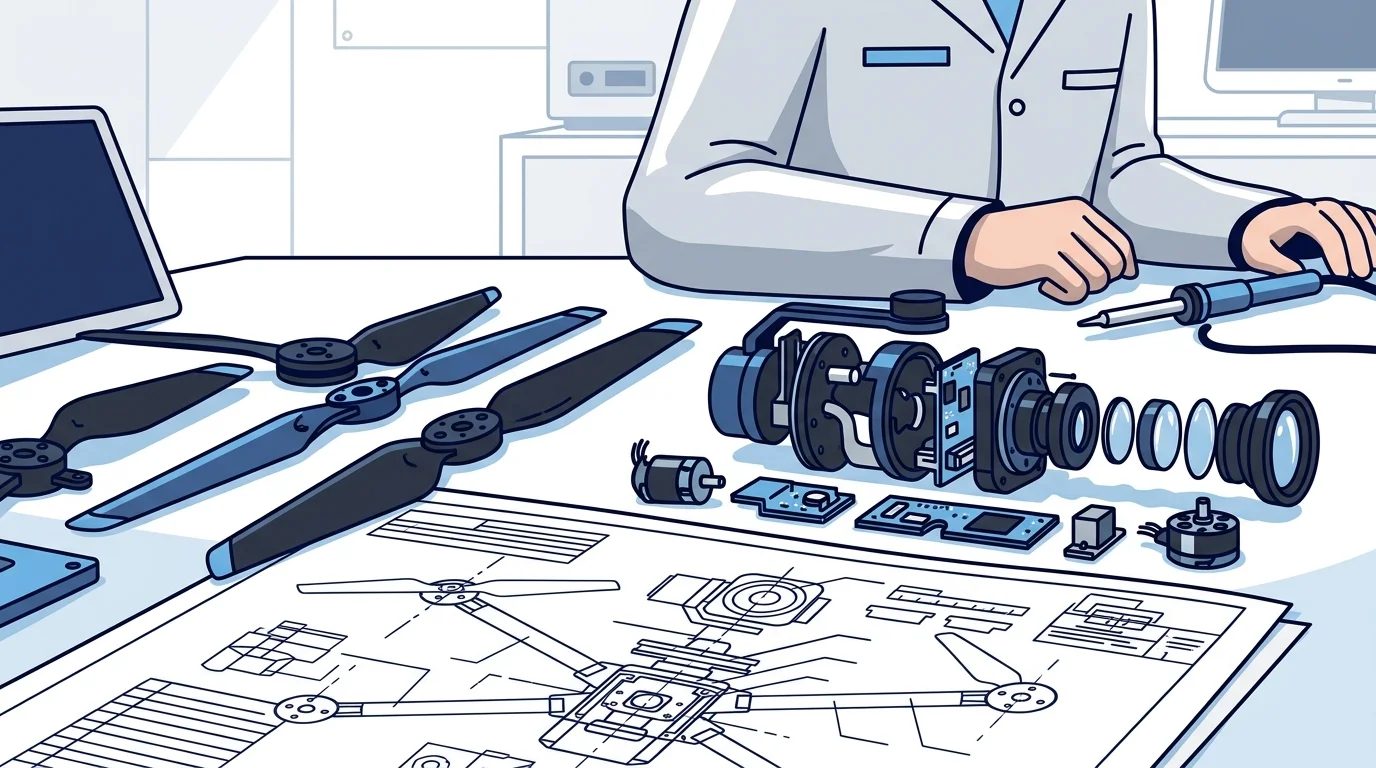
“A superior drone must be more than just a stable aerial platform; it must serve as an uncompromising eye in the sky.”
This pivotal acquisition revolutionized the integrated cameras across their premium fleet. The integration of advanced Color Science and larger format sensors resulted in an exponential leap in image fidelity. With natural color reproduction and an expansive dynamic range, the brand has become the undisputed number one choice for professional cinematographers worldwide.
Beyond Media: Enterprise and Industrial Solutions
While consumer media captures the public’s imagination, the company’s enterprise division is quietly reshaping critical global industries. The rugged Matrice series and highly sensitive Zenmuse thermal cameras have become indispensable tools for search and rescue operations, firefighting, and critical infrastructure inspections.
Furthermore, the agricultural sector has experienced a technological renaissance thanks to the Agras series. These specialized heavy-duty drones are designed for precision farming, executing highly targeted crop spraying and fertilizer distribution. This innovation has delivered massive efficiency gains, reducing chemical waste while maximizing crop yields.

Ultimately, the story of the DJI drone brand is a testament to relentless innovation and global integration. By merging exceptional manufacturing capabilities with top-tier engineering talent, they have fundamentally changed our relationship with the sky. As we look toward a future driven by artificial intelligence and fully autonomous flight systems, this technological pioneer is well-positioned to maintain its aerial supremacy for decades to come.
Frequently Asked Questions
Where is the DJI drone brand from?
DJI is a Chinese technology company headquartered in Shenzhen, a city widely recognized as the hardware and innovation capital of China.
Who founded DJI and when?
The company was founded in 2006 by Frank Wang, a university student who turned his passion for remote-controlled flight into a global tech empire.
What is DJI's global market share?
As of 2026, DJI holds over 70% of the global commercial and civil drone market, with its consumer market share reaching up to 85% in certain sectors.
Does DJI only manufacture drones?
No, in addition to drones, DJI produces professional camera stabilization systems like the Ronin, handheld cameras like the Osmo Pocket, and industrial agricultural equipment.
How did the Hasselblad partnership affect DJI drones?
DJI acquired a majority stake in Hasselblad in 2019, which allowed them to integrate professional-grade Color Science and advanced sensors into their drone cameras for cinema-quality imaging.